Jewish headstones & memorials
Jewish Memorials, guided by your community
Headstones and monuments with Hebrew and English inscriptions for Jewish families across Melbourne and Victoria — designed with you, and with the guidance of your rabbi, your community and the cemetery.
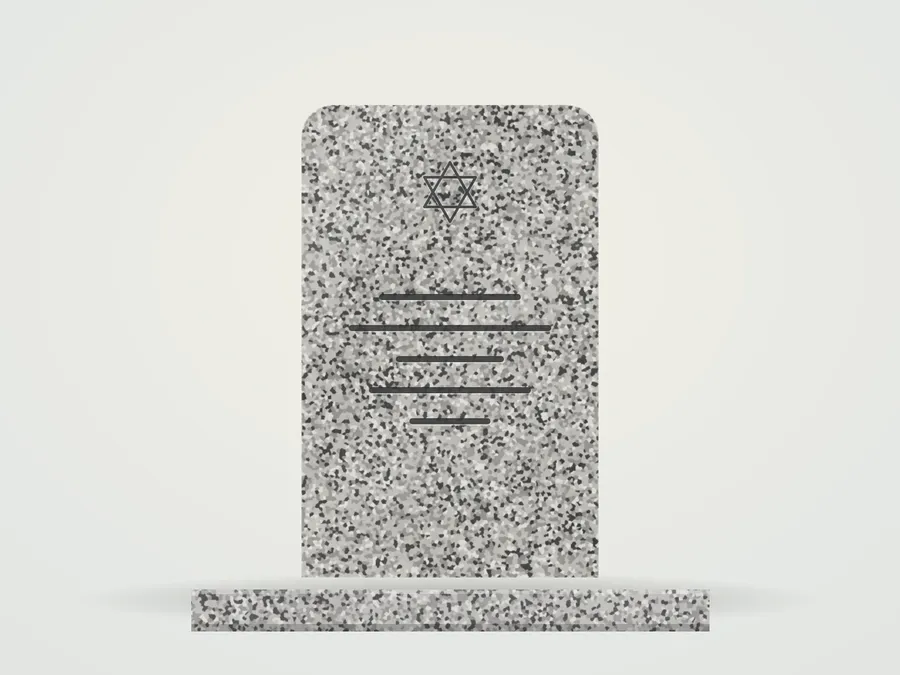
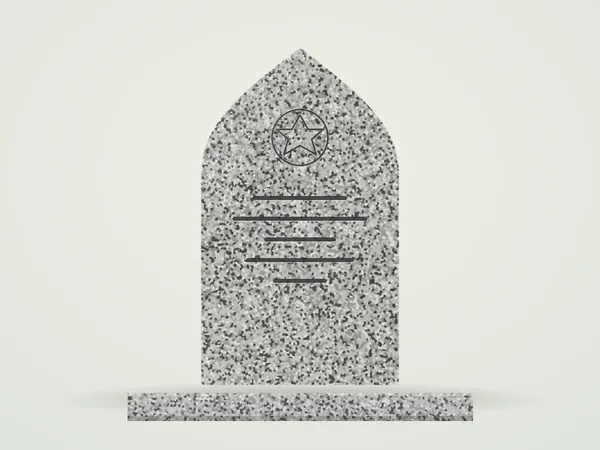
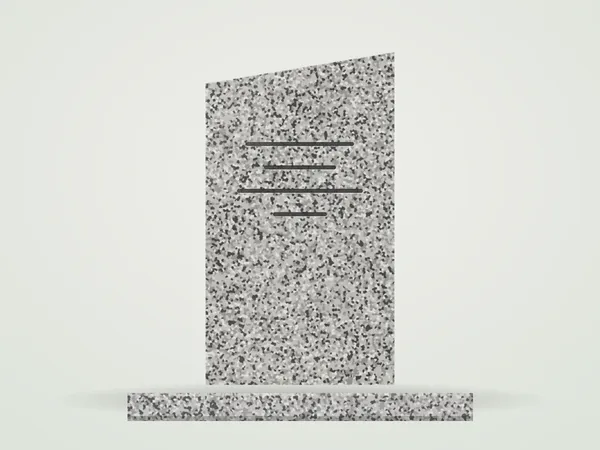
Illustration of a design concept — not a completed project.

Our approach
Traditions differ — we follow yours
Orthodox, Conservative or Masorti, Progressive or Liberal, and secular Jewish families can approach a memorial quite differently — and customs vary again between communities, congregations and cemeteries.
Some families keep closely to a traditional form and wording; others want a design that feels more personal or contemporary. Neither is more “correct” in our eyes. We work with you — and, where you wish, with your rabbi, your community or the burial society (chevra kadisha) — and with the cemetery, so the memorial reflects your family’s practice.
An honest note. We never describe a design as religiously approved. Questions of Jewish law belong with your rabbi; questions of stone, lettering and cemetery rules are ours to help you with.
Headstone design options
Traditional and contemporary memorials
Jewish memorials are often dignified and restrained, with the inscription at their heart. Within that, there is room for many forms — from a classic upright tablet to a cleaner, modern shape.
Upright tablet
A classic headstone with a flat or gently shaped top, Hebrew usually set above the English.
Flat ledger stone
A stone laid over the grave. Some Sephardi families traditionally favour this form; others choose it for its quiet presence.
Contemporary forms
Slimmer profiles, clean lines and modern lettering — designed within any community guidelines that apply.
Companion memorials
A shared headstone for a husband and wife or two family members, side by side.
Symbols, if you wish
A Magen David, a menorah, candles or a tree; the hands of the priestly blessing for a Kohen, or a pitcher for a Levi. Or no symbol at all.
Images & portraits
Some communities and Jewish sections restrict portraits or figurative images; others allow them. We’ll check before anything is included.
Inscriptions
Hebrew and English inscriptions
Many Jewish memorials carry both Hebrew and English. These samples show some of the traditional elements and how Hebrew lettering sits on dark granite.
פ״נ
Hebrew · at the top
“Here lies” — from po nikbar or po nitman
דוד בן אברהם
Hebrew name · sample
David, son of Avraham
י״ב בניסן תשפ״ה
Hebrew date · sample
12 Nisan 5785
תנצב״ה
Hebrew · at the foot
“May their soul be bound up in the bond of eternal life”
Typeset samples for illustration. Final lettering is prepared for your family to check and approve.
A traditional layout, from top to bottom
- Opening
- פ״נ, sometimes with a symbol such as the Magen David.
- Hebrew name
- Usually with a parent’s name — ben (son of) or bat (daughter of) — and titles such as HaKohen or HaLevi where they apply.
- English name
- As the person was known, perhaps with words like “beloved mother and grandmother”.
- Dates
- The Hebrew date, the civil date, or both.
- Closing
- תנצב״ה — the abbreviation of “May their soul be bound up in the bond of eternal life”.
Some families add ז״ל (“of blessed memory”) after a name, a line of a psalm, or a short epitaph in English. Others prefer the simplest possible wording. All of these are your family’s choice.
Getting the Hebrew right. We set Hebrew from text you, your rabbi or your community provide, with or without vowel points as you prefer. Before anything is engraved, we ask that someone who reads Hebrew well checks the final layout letter by letter — including the Hebrew date.

Stone setting & unveiling
Preparing for the stone setting
Many communities gather for a stone setting — also called an unveiling, or sometimes a consecration — once the memorial is in place.
It is commonly held within the first year, though timing and customs vary: some families gather after the first thirty days (shloshim), many closer to the first yahrzeit, and some communities follow their own guidance. If you have a date in mind, tell us early. We’ll be honest about what is involved — design, approvals and making the stone — so you can plan the gathering with realistic expectations.
- If you’d like the memorial covered for the unveiling, we’ll talk through what is possible with the cemetery.
- If you would prefer installation work to avoid Shabbat or festivals, tell us — we’ll discuss timing with you and the cemetery, which sets its own installation schedule.
A small stone of remembrance. Many visitors place a small stone on the memorial as a quiet sign that someone has been and remembered. Some families like the top of the headstone, or a ledge on the base, to be shaped so that stones can rest there — something we can consider in the design.
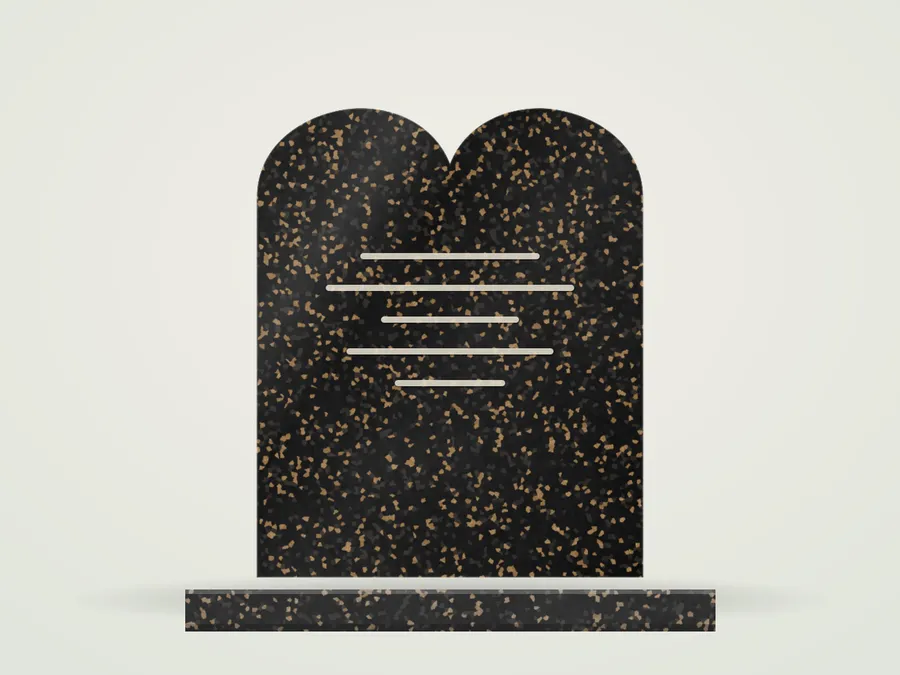
Family & individual monuments
For one person, or for generations
Whether you are remembering one person or planning a memorial for a couple or a wider family, we’ll help you think about how it may need to grow over time.
- Individual headstone
- A single upright stone, or a headstone on a base.
- Companion headstone
- One memorial with matching inscriptions for two people.
- Full monument
- A headstone with a base and ledger covering the grave, where the cemetery allows.
- Space for the future
- Room planned for a name, in Hebrew and English, to be added later.
Stone selection & personalised design
Choosing the stone, and the personal details
Black and grey granite are the most common choices for their durability and the clarity they give to Hebrew lettering. If a particular stone has meaning for your family — a pale limestone reminiscent of Jerusalem, for example — ask us, and we’ll tell you honestly whether it is available and suitable for your cemetery.
-

Black granite
Formal, with crisp lettering
-
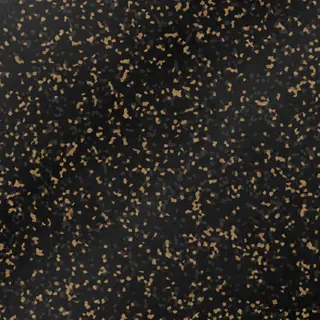
Flecked black granite
Dark, with a subtle sparkle
-

Grey granite
Soft, natural and versatile
-

Textured grey
A natural, hand-finished feel
-

White marble
Pale and classic, with care needs
Representative digital swatches — natural stone varies, and we’ll show you real samples.
Personal touches
Within any guidelines your community follows, a memorial can still speak of the person: a few words they lived by, a line of a psalm, a motif that recalls their work or their love of the garden, or lettering in a style that suits them.
Finish and lettering
Polished, honed or textured surfaces; engraved, painted or gilded lettering. We’ll show you how Hebrew and English look together before you decide.
Materials & finishesCemetery & community requirements
Rules that may apply to your memorial
Jewish sections of cemeteries, and the communities that care for them, may have their own guidelines alongside the cemetery’s. We find out what applies before we begin designing.
-
Jewish sections
Many cemeteries have dedicated Jewish sections, which may set their own expectations for design, size or imagery.
-
Community guidelines
Some congregations and burial societies have guidance on wording, symbols or portraits. We’ll work with you to follow it.
-
Your rabbi or community
If you would like your rabbi or community to review the design, we’ll prepare a clear copy for them.
-
Size & materials
Dimensions, stone types and foundations are set by the cemetery, and may differ between sections.
-
Permits & approval
A memorial permit is generally needed before installation, and some sections have additional approval steps.
-
Matching existing graves
If family members rest nearby, we can design a memorial that sits comfortably alongside theirs, where permitted.
Working together
How we’ll work with you
We move at your family’s pace, and we’re happy to include anyone you would like in the conversation.
-
Listen & learn
We hear about your loved one, your customs, any community guidance and the date you may have in mind for a stone setting.
-
Design & check
We prepare the design and Hebrew and English layout for your family — and your rabbi or community, if you wish — to review.
-
Approve & install
After a written quotation and the necessary approvals, the memorial is made and installed to the cemetery’s requirements.
Questions we may ask
- Which cemetery and section, and do you know the grave or plot number?
- Is there guidance from your rabbi, congregation or burial society we should follow?
- What is the person’s Hebrew name, and their father’s or mother’s Hebrew name?
- Would you like the Hebrew date, the civil date, or both?
- Are you planning a stone setting, and is there a date in mind?
Helpful to have, if you can
- Cemetery paperwork or the grave location
- The Hebrew name and any titles, written or typed in Hebrew
- The date of passing, so the Hebrew date can be confirmed
- Any wording your rabbi or community has suggested
- Photos of family memorials nearby, if you would like a match
If some details are still being gathered, that’s completely fine. We can begin with a conversation.
Explore further
Other memorial traditions
You may also find ideas in these pages, or answer a few gentle questions for suggestions.
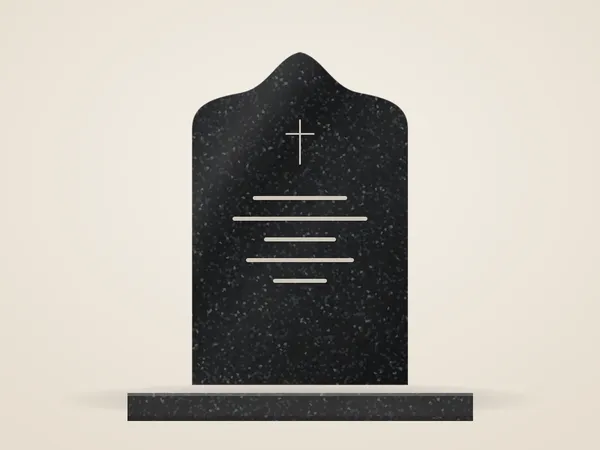
Christian memorials
Traditional and contemporary designs, with scripture or symbols if you wish.
Explore
Illustrations of design concepts — not completed projects.
Questions
Questions about Jewish memorials
Some of the things families ask us most. If you’re wondering about something else, please ask.
Read all FAQsWhen should we start planning for a stone setting?
Whenever it feels right for your family. Because design, community and cemetery approvals, and making the stone all take time, an early conversation gives you the most flexibility. Once we know the design and the cemetery, we’ll give you a realistic estimate so you can choose a date with confidence. More about timing.
How do you make sure the Hebrew is correct?
We set the Hebrew from text provided by you, your rabbi or your community, and prepare a clear proof of the full layout. We ask that someone who reads Hebrew well checks every letter — and the Hebrew date — before engraving begins.
Does the community or rabbi need to approve the design?
It depends on the cemetery and community. Some Jewish sections and burial societies have their own guidelines or approval steps in addition to the cemetery’s memorial permit; others do not. We’ll help you find out what applies and prepare whatever is needed.
Can a photograph be included on the headstone?
Practice varies. Some communities and Jewish sections discourage or restrict portraits, while others permit them. We’ll check the guidelines for your loved one’s grave and talk it through with you before including any image.

Whenever you’re ready
Talk with us about a memorial for your family
Tell us about the person you are remembering, your community’s customs and any date you have in mind. We’ll listen first, and explain your options clearly.
- Hebrew & English inscriptions
- Guided by your community
- No obligation