Design
Custom memorial design
Shape a bespoke memorial around a personality, a passion or a family story.
Explore
Cultural & multicultural memorials
Families across Melbourne and Victoria carry traditions from every corner of the world. We’ll help you create a headstone that honours your loved one’s heritage, faith and family customs — in the words, script and symbols that feel right to you.


Welcome
Whatever your family’s background, you are welcome here. A memorial can hold a name in more than one language, a hometown on the other side of the world, a symbol from a place of worship, a photograph everyone knows by heart.
No two families observe their traditions in quite the same way. Customs shift between regions, generations, faiths and individual households — and sometimes between brothers and sisters in the same family. So rather than arriving with assumptions, we begin by asking what matters to you, then help you bring those wishes together in one considered design.
The examples on this page are simply ideas some families choose. Take what is meaningful, leave what is not, and tell us anything we haven’t thought of.

Chinese memorial traditions
Chinese headstones often carry a family’s history as well as a name — where they came from, who remembers them, and the generations that follow.
Depending on your family’s background and wishes, a design might include:
Many families visit at Qingming, around early April, and some also at Chung Yeung, to clean the grave and pay their respects. If those visits are important to you, we can talk about finishes and details that are practical to care for.
Vietnamese memorial traditions
Every tone mark in Vietnamese carries meaning, so a Vietnamese inscription deserves particular care — and a design that reflects your family’s faith and way of remembering.
Some of the details families often ask about:
Families may also prefer a particular layout — for example, Vietnamese above English or the two side by side. We’ll prepare options so you can see how each looks before deciding.
Greek & Italian memorial traditions
For generations, Greek and Italian families have shaped Melbourne’s cemeteries with portraits, faith symbols and inscriptions in their own languages. Here are some of the elements families choose today.

Many choose a ceramic or porcelain photo plaque, an Orthodox cross, and names in Greek alongside English. A καντήλι (kandili, an oil lantern) or a vase may be included where the cemetery allows. A familiar inscription is Αιωνία η μνήμη — “memory eternal”.
Porcelain photographs have a long history on Italian memorials, often with Catholic symbols such as a cross, the Madonna or the Sacred Heart. Some families record a hometown in Italy, and choose inscriptions such as Riposa in pace or In memoria di. Lanterns and vases are welcome where permitted.
Lanterns, vases and photo plaques. Cemeteries set their own rules about attachments, fittings and items placed on a grave, and these can differ between sections of the same cemetery. We’ll check what is permitted before the design is finalised. Learn about cemetery requirements.
Many communities
Victoria is home to Lebanese, Maltese, Croatian, Serbian, Indian, Filipino, Sri Lankan, African and Pacific communities, among many others. Within each, customs vary widely — so we never presume. These are simply the kinds of preferences families share with us.
An inscription in the language your loved one spoke at home — and, for some languages, a choice of script, such as Cyrillic or Latin. Names can appear exactly as they were written in each language.
A symbol from your church, temple, mosque or tradition — or no religious symbol at all. Faith is personal, and even families of the same community often choose differently.
Some families hold a blessing or unveiling when the headstone is placed, or prefer certain dates. Let us know early, and we’ll plan the timeline with you as far as the cemetery allows.
A village, island, town or region can be a quietly powerful detail — a way of telling future generations where the family’s story began.
A border inspired by embroidery, weaving or carving; a flower from home; lettering in a meaningful colour. Small details like these can make a memorial feel familiar.
Elders, cousins overseas, a priest or community leader — we’re happy to work with whoever your family would like involved in the decisions.
Multilingual inscriptions
A memorial can hold more than one language side by side — the language of home, of faith, and of the grandchildren who will visit. Here are a few short phrases families sometimes choose.
Sample phrases for illustration only — your family may prefer different wording, characters or a regional expression.
Which language comes first, whether text runs vertically or horizontally, and how the two balance in size all shape the final look. We’ll show you more than one arrangement so you can compare them.
We’ll share a written proof and go through each name, character, accent and tone mark with your family. Because a single stroke can change a meaning, we also gently recommend asking a trusted translator, priest, elder or community member to review the wording. Nothing is engraved until your family is confident it is right.
Portraits, motifs & family designs
A familiar face, a meaningful symbol, a place for the whole family — these are often the elements that matter most to the people who visit.
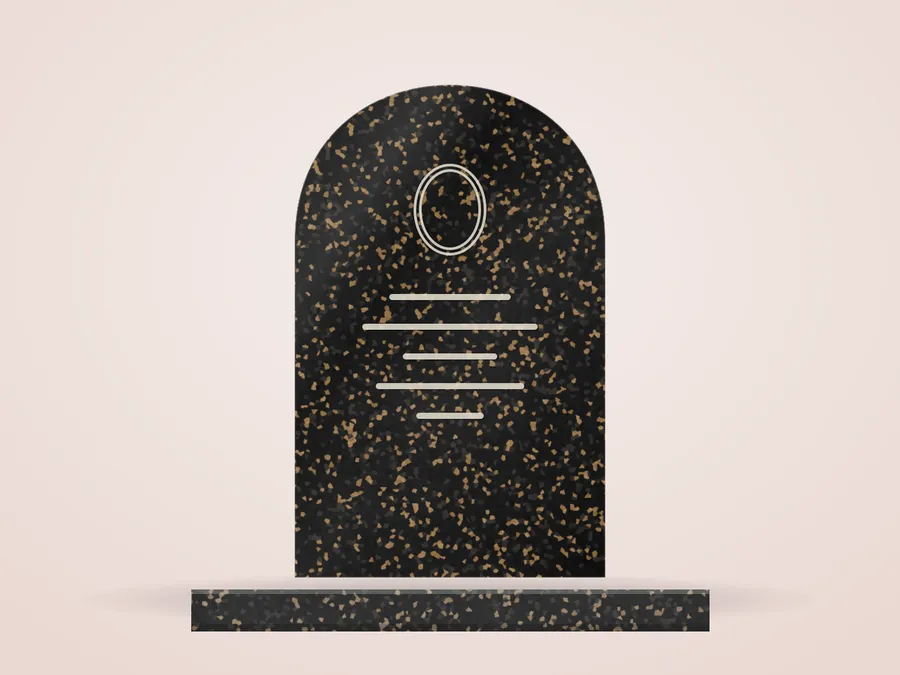
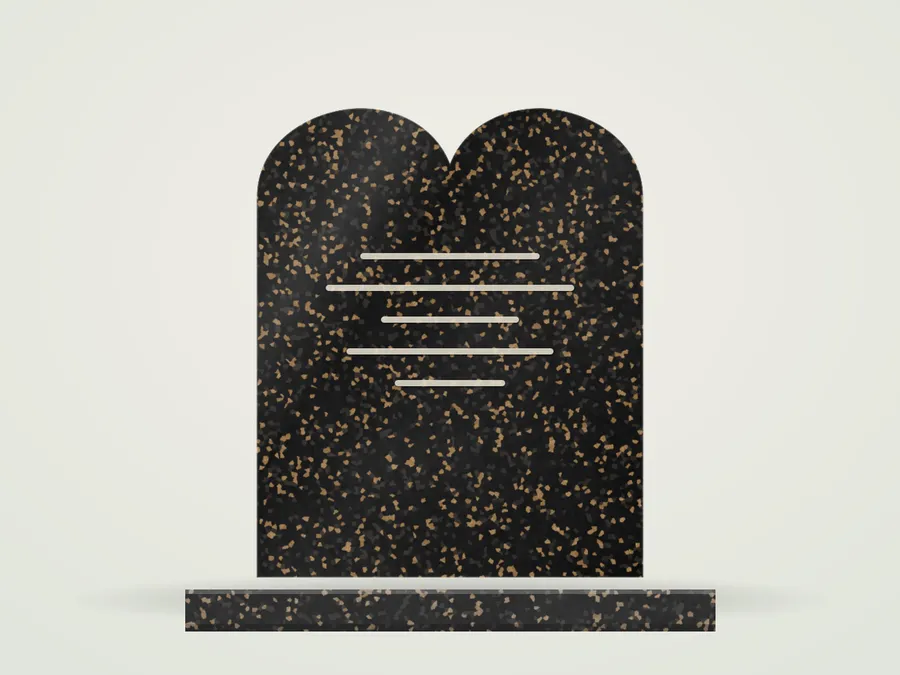
Illustrations of design concepts — not completed projects.
Tell us about your family
You know your family’s customs far better than any guide could. The more you share, the more personal the memorial can be.
There’s no need to have every answer before we meet. Some families bring a page of notes; others simply bring a photograph and a story. If relatives see things differently, that’s completely normal — we can prepare options for everyone to consider together.
Questions
A few answers families often look for. If your question is about a particular custom, we’re always glad to talk it through.
More on languagesYes — inscriptions can be prepared in many languages and scripts, often alongside English. Tell us the languages you have in mind and we’ll talk through layout, lettering style and how each script will sit on the stone. Read more about languages.
We work from the wording your family supplies, prepare a written proof and review it with you line by line. We also recommend that a trusted translator or community member checks it, particularly for characters, diacritics and tone marks. Nothing is engraved until your family has approved the final proof.
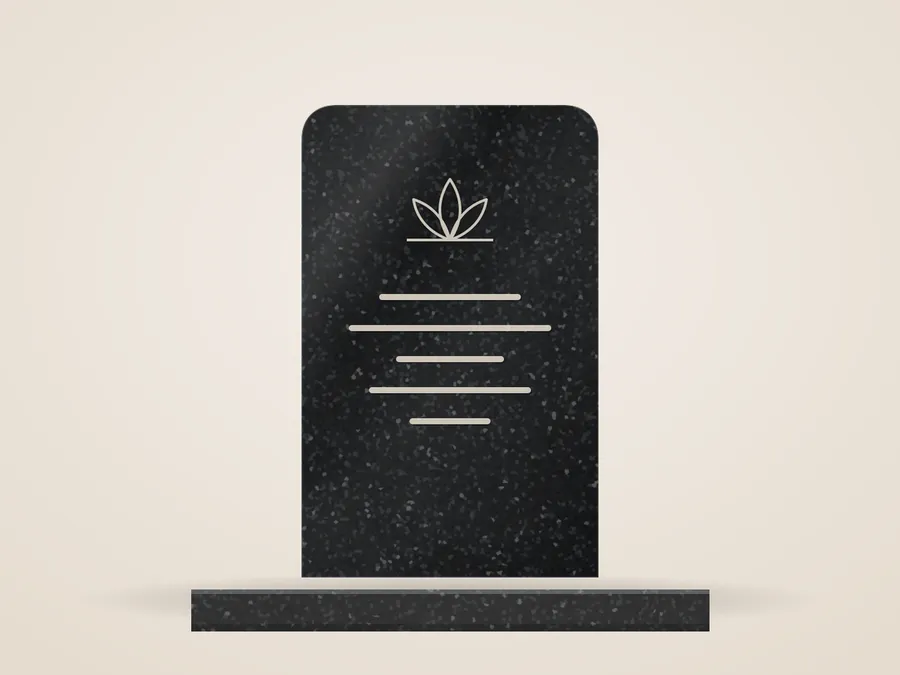
Many families do, either as a ceramic or porcelain photo plaque or as an image etched into dark granite. Whether a photograph can be included depends on the cemetery’s rules, so we’ll confirm this with you. The original photo makes a big difference — we’ll help you choose one that is likely to reproduce well.
Often, yes. If you expect to add a name in the future, we can plan space in the original layout so the later inscription sits naturally. Additions usually need cemetery approval. More about multiple names.
That’s very common, especially across generations or when families blend traditions. We can prepare a few design options — for example, with and without a particular symbol or language — so everyone can see them side by side before deciding.
Design
Shape a bespoke memorial around a personality, a passion or a family story.
Style
Compare classic forms with cleaner, modern designs to find your direction.
Planning
Understand permits and the rules that may affect photos, fittings and size.

Your family, your traditions
Tell us about your loved one, your language and your customs. We’ll listen carefully, suggest ideas and help you shape a design your whole family can stand beside.