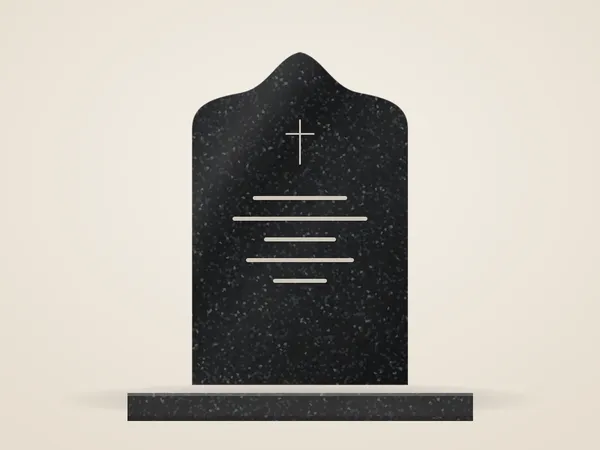
Christian memorials
Traditional and contemporary designs, with scripture or symbols if you wish.
ExploreIslamic headstones & memorials
Simple, respectful headstones and memorials for Muslim families across Melbourne and regional Victoria — shaped by your family’s practice, your community’s guidance and the rules of the cemetery.
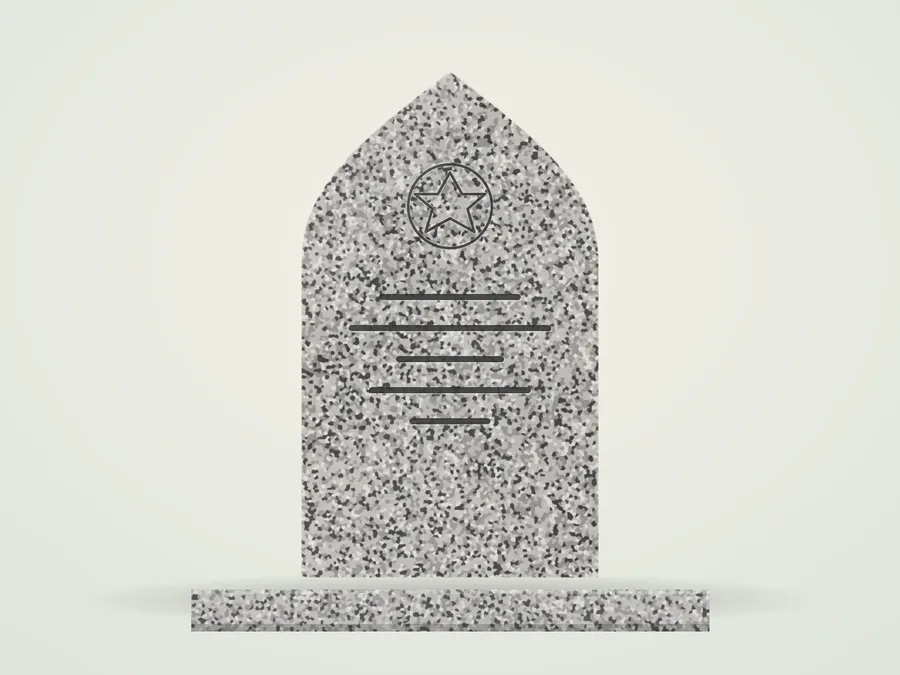
Illustration of a design concept — not a completed project.
Our approach
There is no single “correct” Islamic memorial — only the one that is right for your family.
Muslim families in Victoria belong to many communities — Turkish, Lebanese, Bosnian, Afghan, Pakistani, Somali, Indonesian, Egyptian, Malaysian and many more — and memorial customs can differ from one to the next.
Practice also varies with scholarly interpretation and personal conviction. Some families feel a grave should be marked very simply, or barely at all; others choose a headstone with carefully chosen words and gentle decoration. We approach each with the same care and the same respect.
Our role is to listen and follow your guidance, not to advise on religious questions. If something is uncertain, many families speak first with their imam, a scholar they trust or an elder in the family — and we are glad to wait until you are ready.
An honest note. We will never describe a design as religiously approved or as suitable for every Muslim family. What we can do is make sure the memorial reflects your family’s wishes and meets the cemetery’s requirements.
Design options
Many families prefer a modest marker that identifies the grave with dignity rather than an elaborate monument. Some scholarly views discourage raised or ornate structures over a grave; others see it differently. We follow your family’s guidance and the cemetery’s rules.

A modest upright stone carrying the name, dates and perhaps a short phrase. Often the first choice for families who value simplicity.
A plaque or low marker set close to the ground — common in lawn sections, and quietly understated.
A gently arched or pointed outline, sometimes recalling a mihrab niche, with a fine border if you wish.
No motifs and no artwork — just clear, well-spaced lettering. Restraint can be deeply beautiful.
Portraits and images. Some families prefer no photographs or images of people on a memorial; others are comfortable including one. There is no expectation either way, and some cemeteries set their own rules about photo plaques.
Inscriptions
Inscriptions can be written in Arabic, Turkish, English or a combination — and we can work with other languages on request. These samples show how different scripts can sit together on dark granite.
Typeset samples for illustration. Final lettering is prepared for your family to check and approve.
Qur’anic verses on stone. Some families choose not to engrave verses of the Qur’an — or the name of Allah — on a memorial, out of concern that the stone may weather, be walked past carelessly or otherwise not be treated with due respect. Others include a verse as an act of remembrance and prayer.
This is entirely your family’s decision, and we will simply follow it.
Getting every letter right. Arabic and other scripts are set from text you provide or approve. Before anything is engraved, we ask that you — or someone you trust, such as a family member or your imam — check the final layout carefully, letter by letter.

Personalisation
Within whatever bounds your family is comfortable with, a memorial can still feel unmistakably personal.
Natural stone
Granite is the stone most families choose for outdoor memorials in Victoria — it is hard-wearing, holds fine lettering well and needs little upkeep. Grey and black granites suit the understated look many families prefer, and a honed (matte) finish gives a softer surface than a high polish.

Soft, matte and calm

Light, clear and enduring

Deep tone, gentle sheen

Crisp contrast for lettering

Warm, but softer and more porous
Representative digital swatches — natural stone varies, and we’ll show you real samples.
Compare materials & finishesOther natural stones are possible where the cemetery permits. Each weathers differently, so we’ll explain the care involved before you decide.
Cemetery requirements
Before we design anything, we find out what applies to your loved one’s grave — so the memorial you fall in love with is one the cemetery can accept.
Many Victorian cemeteries have dedicated Muslim sections or areas, which may carry their own guidance on memorial size and style.
Lawn sections often allow only a plaque or low headstone on a concrete beam; monumental sections may allow more. It depends on the cemetery.
Maximum dimensions, suitable stone and foundation details are set by the cemetery, and we design within them.
In Muslim sections, graves are commonly laid out so the person rests facing the Qibla. That layout is the cemetery’s — the memorial is placed according to it.
A memorial permit or approval is generally needed before installation. We’ll help you prepare the application.
Some cemeteries ask families to wait for the ground to settle before a headstone is installed. We’ll confirm what applies to you.
Working together
Every family’s timing is different. Here is the general shape of the journey — from a first conversation and consultation through to design and installation.
A first conversation
Tell us about your loved one, the cemetery and any guidance your family follows. Phone, video or in person — whichever feels easiest.
If relatives overseas would like to be involved, we can share designs by email so everyone has a say.
Design & wording
Shape, stone and lettering are drawn up for you to review, with Arabic or other scripts set out clearly for checking.
Checking & approvals
Once your family is happy with every detail, you receive a written quotation and the design goes to the cemetery for any permit required.
Crafting & installation
Your memorial is made and installed in line with the approved design and the cemetery’s requirements.
If your family would like to visit together once it is in place, let us know and we’ll keep you informed of the timing.
Don’t worry if you have none of these yet. A first conversation needs no preparation.
Explore further
Every family’s path is different. You may also find ideas in these pages, or answer a few gentle questions for suggestions.
Traditional and contemporary designs, with scripture or symbols if you wish.
Explore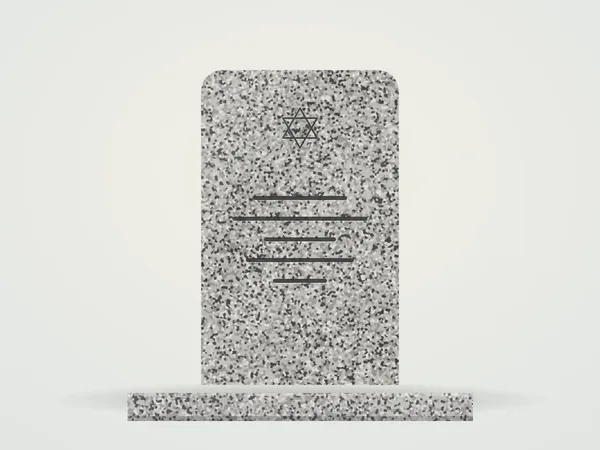
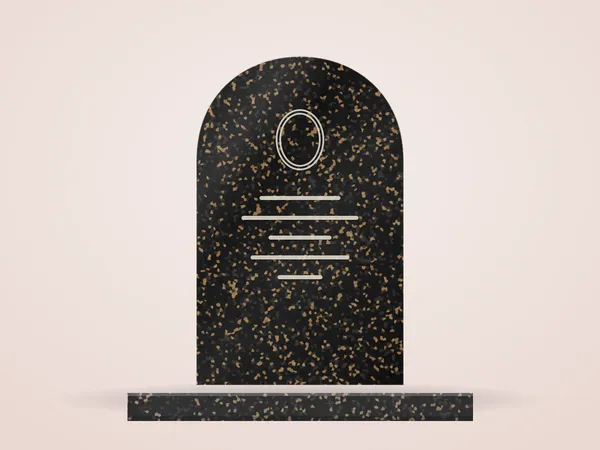
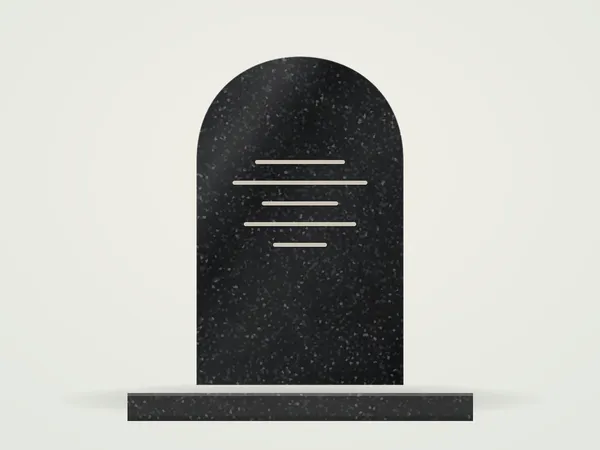
Illustrations of design concepts — not completed projects.
Questions
If your question isn’t here, please ask — there is no such thing as a small question.
Read all FAQsYes. Many families choose exactly that, and a plain, well-proportioned stone with careful lettering can be very beautiful. We’re just as glad to help with the simplest marker as with a more detailed design.
Yes. We set Arabic (and Turkish, and other languages on request) from text your family provides or approves, and we prepare a clear proof of the layout. We ask that someone who reads the language well — a family member or your imam, for example — checks it letter by letter before anything is engraved. More about inscriptions in other languages.
The direction of the grave is set by the cemetery’s layout. In Muslim sections, graves are commonly arranged so that the person rests facing the Qibla, and the memorial is positioned according to that layout and the cemetery’s rules. If you have a question about a particular grave, we’ll raise it with the cemetery for you.
It depends on the cemetery, which may ask families to wait for the ground to settle, and on the permit process. Some families also have their own customs about timing. We’ll confirm what applies and give you a realistic estimate once we understand your memorial. More about timing.
We aren’t religious advisers, and we wouldn’t want to speak for your faith. We can explain what is possible in stone and what the cemetery allows; many families then talk the design over with their imam or a scholar they trust. Whatever your family decides, we’ll follow it.


When your family is ready
Share your family’s wishes, your questions and the cemetery’s details, and we’ll talk through what is possible — gently, and with no obligation.