



Materials & finishes

Choosing stone for a memorial, made simple

Granite, marble and other natural stones each age differently outdoors. This guide explains how they look, how they wear and how to care for them — so you can choose with confidence.

White marble with soft grey veining
Natural stone: no two slabs are quite alike.

Stone explorer

See how colour and finish change a stone

Choose a stone, then a finish, to compare their character. The same granite can look strikingly different when polished, honed or textured.

Representative digital swatch of black granite with a polished finish

Representative digital swatches. Natural stone varies from quarry to quarry and slab to slab — always view a physical sample before deciding.

1 · Choose a stone

2 · Choose a finish

Black granite

Representative swatch of polished black granite
Black, polished
Representative swatch of polished grey granite
Grey, polished

Granite

Why granite is the most popular memorial stone

Granite is an igneous stone formed from cooled magma, made mostly of interlocking crystals of quartz and feldspar with smaller amounts of darker minerals. Those crystals make it hard, dense and highly resistant to weathering — qualities that matter when a memorial stands outdoors through Victorian summers, winters and decades of rain.

  • Takes and keeps a high polish, which helps it shed water and dirt
  • Holds fine lettering, carving and etched detail well
  • Low maintenance — usually just gentle washing
  • Wide range of natural colours, from black to grey, rose and green

Stone names such as “black granite” are trade names. Two stones sold under similar names can differ in quality, colour and grain, so we always recommend looking at a physical sample.

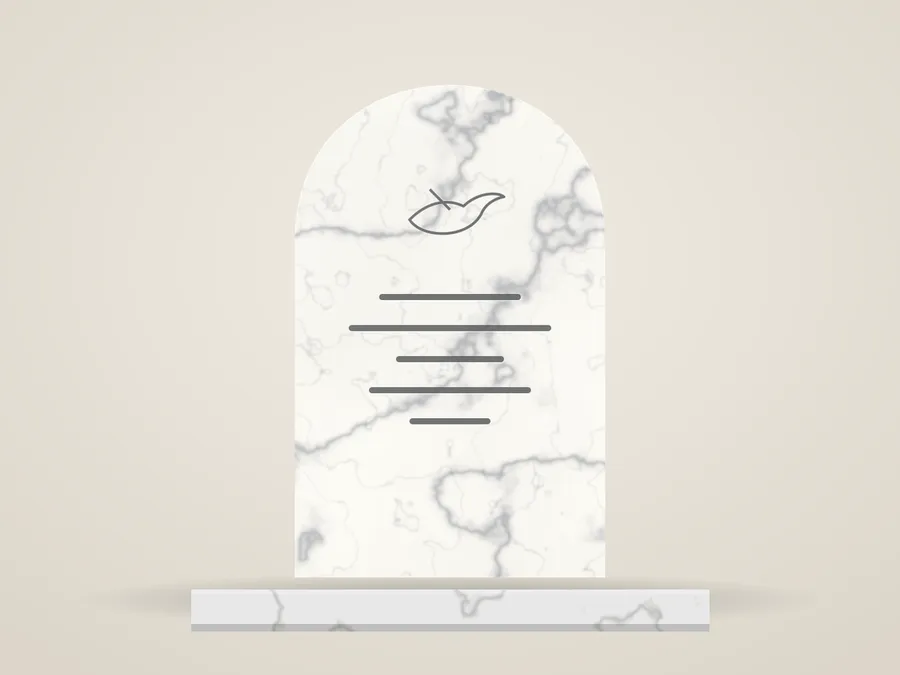
Illustration of a white marble arched headstone with an engraved dove
Illustration of a design concept — not a completed project.

Marble

Marble: classic beauty that asks for more care

Marble is a metamorphic stone made largely of calcite. It is softer than granite and reacts with acids, including the mild acidity of rainwater. Outdoors, polished marble gradually loses its shine, can develop a slightly sugary surface, and may stain or grow lichen. Over many years, fine lettering can soften.

None of this means marble is wrong — many families love its luminous quality, and with realistic expectations and gentle care it can be very beautiful. It is often best used in sheltered positions, as a feature panel, or combined with a granite base.

Check before you choose. Some cemeteries and sections restrict marble or particular finishes. We’ll confirm what is permitted before you commit to a design.

Other materials

Sandstone, bluestone and bronze

These materials appear on many Victorian memorials, old and new. Each has a place — but not every one suits every setting.

Honey-coloured sandstone blocks showing natural iron staining

Sedimentary stone

Sandstone

Warm and historic, and common on older memorials. It is porous, so it can erode, stain or flake over time — as the iron marks in this wall show. Generally less suited to new outdoor memorials unless the particular stone and cemetery allow it.


Dark grey natural stone surface

Volcanic stone

Bluestone (basalt)

Victoria’s signature building stone, seen in Melbourne’s laneways and historic buildings. Dense and hard-wearing, it can make a striking base or contemporary memorial. Availability and suitability for a particular design are confirmed case by case.

Illustration of a flat memorial plaque

Metal

Bronze

Widely used for plaques in lawn sections and niche walls, often to a cemetery’s set design. Bronze develops a natural patina over time; some cemeteries specify the plaque style and supplier, which we’ll check for you.

Finishes

Polished, honed or textured?

The finish changes how a stone looks, feels, ages and how easily lettering can be read. Many memorials combine finishes — for example, a polished face with textured edges.

Representative swatch of grey granite with a polished finish

Polished

Mirror-like and deep in colour. The most common finish for granite headstones: it highlights the stone’s pattern, sheds water readily and is easy to clean.

Representative swatch of grey granite with a honed finish

Honed

Smooth but matte, with a softer, lighter appearance. Understated and contemporary; it can show marks and hold dirt a little more readily than polished stone.

Representative swatch of grey granite with a textured finish

Textured

Flamed, bush-hammered or rock-pitched surfaces give a rugged, natural look. Usually used for edges, bases or contrast panels rather than lettered faces.

Inscription methods

How lettering and images are added

The right method depends on the stone, the finish, the language and how the memorial will be seen. We’ll recommend options that stay legible and suit your cemetery.

A general guide only. Durability depends on the stone, the exposure and the quality of the work; we’ll discuss the best approach for your design.
MethodWhat it looks likeWorks best onOver time
Engraved (incised) letteringLetters cut into the stone, often V-shaped, by sandblasting or by handMost granites and marbleVery long-lasting; on dark polished stone the cut shows naturally lighter
Painted letteringEngraved letters filled with durable paint for contrastLight or patterned stonesPaint can fade with sun and weather and may need touching up over the years
Gilded letteringEngraved letters finished in gold or metal leafDark polished graniteLong-lasting and elegant; may eventually need refreshing
Raised letteringBackground cut away so letters stand proud of the surfaceFeature panels and traditional designsDurable; more involved to produce
Applied letteringMetal letters (such as bronze) fixed to the stoneSome traditional and lawn designsDepends on fixing and metal; individual letters can be replaced
Laser-etched imagesFine photographic or artistic images etched into the surfaceFine-grained, dark polished stoneA surface-level image; best protected on dense black stone
Ceramic or porcelain photo plaquesA colour or black-and-white portrait set into the stoneMost memorials, where permittedFired images resist fading well; check cemetery rules first

Durability & suitability

How materials compare outdoors

Victoria’s climate brings strong summer UV, winter rain, frost in some regions and salt air near the coast. These broad comparisons will help — the right choice still depends on the specific stone, its finish and the site.

General characteristics only — not a guarantee of lifespan. Individual stones vary, and cemetery rules may limit materials and finishes.
MaterialResistance to weatheringMaintenanceTypical role
Granite (polished)Very highLowHeadstones, monuments, bases, plaques
Granite (honed or textured)HighLow to moderate — can hold dirt and lichenContemporary designs, edges, bases
MarbleModerate — sensitive to acids and pollutionModerate to highClassic headstones, sheltered or feature use
SandstoneVariable — porous, can erode or flakeModerate to highRestoration of historic memorials, select new work
Bluestone (basalt)HighLow to moderateBases and contemporary designs
BronzeHigh — develops a patinaLow to moderateLawn and niche plaques

Not every material suits every installation. Material suitability, weathering and approved finishes vary by stone and by cemetery. Some cemeteries specify materials, colours, finishes or even suppliers for particular sections. We’ll always check your cemetery’s requirements and give you honest advice before you decide.

Cleaning & care

Caring for a memorial, gently

Many families find quiet comfort in tending a memorial. A little gentle care is all most stones need.

A hand arranging small white flowers in a glass vase

Granite

  • Rinse with clean water and wipe with a soft cloth, sponge or soft-bristled brush.
  • If needed, use a small amount of mild, pH-neutral soap, then rinse thoroughly.
  • Dry polished surfaces with a soft cloth to avoid water marks.

Marble and older memorials

  • Use clean water only and the gentlest touch.
  • Never use vinegar, lemon or other acidic cleaners — they etch marble.
  • Don’t scrub weathered, cracked or flaking stone or loose lettering; ask for advice first.

Please avoid

  • Bleach, acids, household bathroom or oven cleaners
  • Wire brushes, scourers and abrasive pads
  • High-pressure washers, which can damage stone, joints and lettering

Test any product on a small, hidden area first. Some cemeteries have rules about cleaning products and when maintenance can be done — check with them before using anything other than water. For lichen, staining or restoration, ask us for advice: restoration & additions.

Questions

Common questions about stone

Which stone lasts longest outdoors?

For most outdoor memorials in Victoria, a good-quality granite with a polished finish offers the best combination of durability and low maintenance. No stone is immune to time, and the quality of the particular stone, the foundation and the installation all matter too. More on choosing stone.

Can I see real stone samples?

Yes — we strongly recommend it. Screens and photographs can’t show the true colour, depth or texture of natural stone. Let us know which stones interest you and we’ll talk about the best way for you to see samples.

Will my headstone look exactly like the sample?

Natural stone varies from block to block, so colour and pattern may differ slightly from a sample. That variation is part of its character. If consistency matters to you — for example, matching an existing family memorial — tell us early so we can discuss it.

Can different stones be combined?

Often, yes — for example, a marble or contrasting granite panel on a darker granite base, or polished and textured finishes on the same stone. We’ll check that the combination is practical and permitted by the cemetery.

Choosing stone

Talk through stone options with us

Tell us the colours and look you’re drawn to and the cemetery you’re working with. We’ll explain the options that suit — honestly, and without pressure.